01 / Quote scope

Powered Stage Monitor

Quote support starts when a powered stage monitor offer names the exact cabinet, the onboard amplifier and what is left out. Stage Monitor Speakers Sourcing matches those fields across factories. It does not rank plants, and it does not treat a dealer logo as authorization.

  1. Freeze system type, continuous power and the mains utilities requirement.
  2. Mark accessories, covers, processing presets and spare transducers as included, excluded or pending.
  3. Ask each factory for drawings and the test basis tied to that model.
  4. Compare currency, quantity, Incoterm and freight after the technical rows agree.
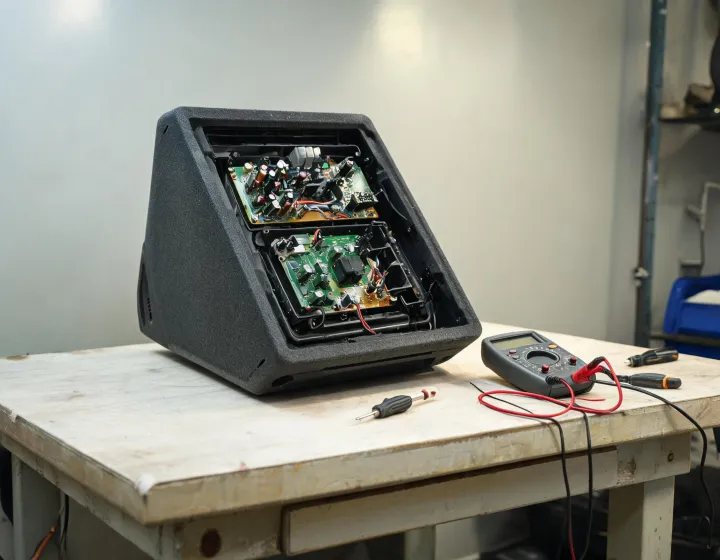
Technician reading a powered wedge amplifier panel in a shop
  • Configuration still open
  • Quantity and US destination
  • File list still open
  • Budget currency still optional

Exact-model evidence matrix

Every cell is a request. A blank answer is a deviation, not a silent yes.

Field What to demand Who answers
Identity Manufacturer name, model, revision and whether the amplifier module is the current build. Proposed supplier
Rated power Continuous power with the standard cited, such as AES2-2012 if that is the method, plus peak if they also print it. Proposed supplier
Input voltage 100-120 V or 220-240 V, frequency, phase, connector and current draw at the stated duty. Proposed supplier
Control interface Analog input, onboard EQ, preset count, and any network port. State who programs it. Supplier, then buyer engineer
Acoustics Frequency response window, maximum SPL conditions, coverage at -6 dB, and noise level of the fan if a fan exists. Proposed supplier
Mechanical Footprint, wedge angle, service access for the module, rigging or yoke as a separate line. Supplier drawing
Commercial Quantity, currency, per-cabinet or whole-order basis, packing, Incoterm, freight and duty treatment. Both sides
Acceptance Datasheet date, factory acceptance test if offered, incoming check, commissioning scope and warranty contact. Named in the quote

Headline rating versus test basis

One camp treats a large SPL number as enough to shortlist a powered wedge. The other camp will not score the offer until distance, weighting, crest factor and duration sit beside the number. Both views can be written into the matrix. Early screening may use the sticker. Awarding the order needs the test basis. This desk records the disagreement; it does not pick a winner without the buyer engineer.

Standard cabinet versus a custom baffle

A catalog wedge keeps the drawing set smaller and the spare parts list closer to a published bill of materials. A custom grille, logo-free finish or altered wedge angle can be necessary for a sightline or a house look. Ask the supplier to price the standard row and the deviation row separately so delivered cost does not hide inside one lump sum.

Interface questions on a powered box

Does the wedge need a separate amplifier rack?

A powered stage monitor carries amplification in the cabinet, so the monitor rack may shrink to a console output and mains. Confirm there is no passive hop, no external DSP the quote forgot, and no driver that still expects a separate amp. If the answer is mixed, split the line items.

How should duty cycle be read?

Amplifier duty cycle is meaningful with the test tone, the temperature and the time window. A 1/8 noise figure used for mains current is not the same statement as a 2-hour music duty. Ask which figure feeds the breaker calculation and which figure feeds the acoustic comparison.

What belongs in commissioning scope?

Preset load, gain check, polarity check and a spare transducer on site are different jobs. Write who attends, for how many hours, and whether travel is inside the equipment price. An unstated visit becomes an exclusion.

Can two quotes share a consumables row?

Grille cloth, feet, covers and a replacement compression driver are consumables or spare parts, depending on the supplier language. Put them on one row with a quantity. Do not fold them into a discount narrative. No saving percentage is claimed on this page.

Minimum input list

  • Powered stage monitor or a named model if you already have one.
  • Application, quantity, US destination, requested timing.
  • Input voltage and whether processing must be onboard.
  • Drawings or a rider, listed as attached in the text.
  • Optional budget with currency and unit or order basis.
  • Preference: high-end, mid-range, budget or undecided.

Then read the specification guide or send the brief from contact. The procurement brief uses the same field list.

Submit Procurement Requirements

Enter a contact name.
Enter a valid work email.
Enter the buying company.
Describe the specification, quantity, destination and delivery timing.