Stage Monitor Speakers Sourcing: $11,000 in Documented Mistakes (So You Don't Repeat Them)
-
Stage Monitor Speakers Sourcing: What Actually Goes Wrong
-
Why you should trust this (briefly)
-
Mistake 1: Treating "powered" as a default upgrade
-
Mistake 2: Wireless stage monitors without a frequency plan
-
Mistake 3: The MOQ trap on small orders
-
Mistake 4: Ignoring dispersion angle
-
What I'd actually check before any stage monitor speakers sourcing order
-
When these rules don't apply
-
Why you should trust this (briefly)
Stage Monitor Speakers Sourcing: What Actually Goes Wrong
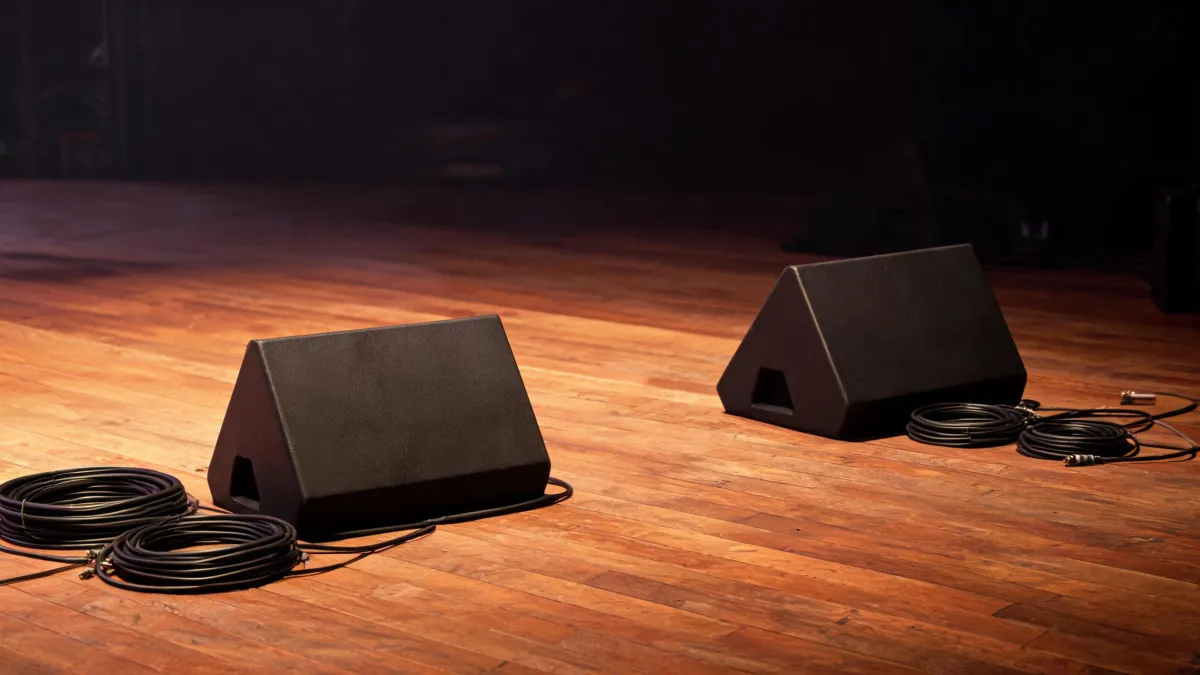
After eight years handling stage monitor speaker orders for rental houses and system integrators, I've documented roughly $11,000 in mistakes that were entirely avoidable. Here's the conclusion up front: the expensive errors in stage monitor speakers sourcing almost never come from picking the wrong brand. They come from spec mismatch—ordering a box that doesn't match the stage, the console, or the way the gear actually gets used.
Most buyers I talk to open with "what's your best price on a powered stage monitor?" By then, about half of them have already chosen the wrong product category for the job.
Why you should trust this (briefly)
I'm not a touring engineer. I'm the person who processes the POs, chases the freight, and eats the blame when a pallet shows up with the wrong connector. Between 2017 and now, I've personally signed off on roughly 340 stage monitor speaker orders—or maybe 320, I'd have to check the system—ranging from a single unit for a church to 24-box systems for a regional rental company.
The mistakes below cost real money. Not theory.
Mistake 1: Treating "powered" as a default upgrade
Everything I read early on said powered stage monitors were the "modern" choice. In practice, I've watched rental companies buy powered units for installs where a passive box plus a shared amp rack would have been cheaper, lighter, and easier to service.
Here's the thing: powered saves you amplifier decisions, not amplifier costs. If the venue already has AC at monitor positions and a rack with spare channels, a passive stage monitor system uses infrastructure you're already paying for. If it doesn't, powered wins. The decision is about what's already in the room—not what's trending.
We once shipped six powered 12-inch wedges to a theater that had no accessible AC drops at the monitor positions (ugh). The client ran extension cords across the stage for a month. That order cost us about $1,900 in restocking fees and freight, plus a client we didn't win back.
Mistake 2: Wireless stage monitors without a frequency plan
This is the outsider blindspot I see most. Most buyers focus on channel count and battery life on wireless stage monitor systems and completely miss frequency coordination and the local RF environment.
Wireless stage monitors are not plug-and-play the way wired ones are. In dense urban venues—anywhere near a TV studio, hospital, or another event space—you're sharing spectrum. A wireless stage monitor system that tests perfectly in a warehouse can drop out during a show.
I learned this the expensive way in September 2022. We supplied a four-channel wireless stage monitor package to a corporate AV company. The units were fine. The venue already had two other wireless systems on overlapping bands, which nobody asked about. First rehearsal, two channels cut out mid-set. We replaced the units—about $2,400 in loaner costs and freight—and the client was understanding. Their end client wasn't.
The fix isn't complicated: ask for the venue's existing wireless inventory before you quote any wireless stage monitor order. If the buyer doesn't know, that's the first red flag.
Mistake 3: The MOQ trap on small orders
Here's where I'll take a position. Small orders deserve the same attention as large ones. When I was starting out, the vendors who treated my $200 orders seriously are the ones I still call for $20,000 orders today.
But I made the opposite mistake too. I once declined to quote a two-unit powered stage monitor order because the paperwork wasn't worth it. That same client came back 14 months later with a 16-unit order for a permanent install. I found out when I saw the PO on a colleague's desk (note to self: never assume order size predicts future order size).
On the sourcing side, minimums are real—factories have floors. But a sourcing partner's job is to find the path: stock allocation, consolidated shipments, or a sample unit to start. If a supplier won't engage below a certain quantity, ask whether that's a policy or just a pricing tier.
Small doesn't mean unimportant. It means potential.
Mistake 4: Ignoring dispersion angle
The question everyone asks about professional stage monitor speakers is "how many watts?" The question they should ask is "what's the coverage angle, and does it match the stage?"
A 60×40 wedge aimed at a vocalist standing three feet away is a different product decision than a 90×60 wedge for a keyboardist at the side of the stage. Here's the causation reversal most buyers miss: people think feedback means the monitor is bad. In my experience, most feedback cases come from the box pointing at the wrong place—a dispersion and placement problem, not a quality one.
This one is partly on us as sourcing partners. We should ask about stage layout before we quote. It takes two minutes and prevents a return.
What I'd actually check before any stage monitor speakers sourcing order
Not a checklist for its own sake—these are the questions that would have saved me the $11,000:
- Power situation: Are there AC drops at monitor positions, and is there an existing amp rack with spare channels?
- RF environment: For wireless stage monitors, what other wireless gear already lives in the venue?
- Console outputs: How many monitor mixes can the console actually send? (This caps the whole system.)
- Stage geometry: Where do performers actually stand relative to the wedge, and what's the throw distance?
- Certification requirements: Does the venue or the buyer's client require specific electrical certifications? Get this in writing—don't assume.
On price: entry-tier powered 12-inch wedges were publicly listed between roughly $350 and $700 per unit at the time of writing (January 2025), depending on brand and distributor. Verify current pricing before you quote—tiers shift by quarter, and stock vs. order pricing diverges more than most buyers expect.
When these rules don't apply
I want to be honest about the limits. If you're outfitting a fixed install with a full design spec from an acoustician, most of these sourcing pitfalls disappear—the spec is already resolved, and the job is matching it. If you're buying for a rental fleet where every box does the same job on different stages, dispersion and power decisions get standardized too.
And if you're a very small buyer placing a first order, don't let this list scare you off. The starting point isn't a perfect spec—it's a conversation about the venue, the gear you already own, and what success looks like six months from now. A good sourcing partner asks those questions before quoting. If they don't, that's your answer.
The mistakes above cost me about $11,000 and one client. That's the cheaper version of the lesson—you can have it for free.
Share: WhatsApp
Filed under notes. Permalink /blog/stage-monitor-speakers-sourcing-11000-in-documented-mistakes-so-you-don039t-repeat-2.html.

Jane Smith
I’m Jane Smith, a senior content writer with over 15 years of experience in the packaging and printing industry. I specialize in writing about the latest trends, technologies, and best practices in packaging design, sustainability, and printing techniques. My goal is to help businesses understand complex printing processes and design solutions that enhance both product packaging and brand visibility.